jack
jack
UK businesses are rethinking what productivity actually means. Hybrid working has changed how and where people work; AI is automating tasks that once consumed hours each week, and mounting pressure to reduce burnout has pushed wellbeing from a nice-to-have into a business priority.
Increasingly, productivity is being measured not by time at a desk, but by output quality, collaboration effectiveness, and whether employees stay.
This broader definition reflects a long-term shift in organisational priorities, where sustainable performance, adaptability, and employee satisfaction are seen as just as critical as traditional efficiency metrics.
AI-Powered Workflows Are Reshaping Daily Productivity
Artificial intelligence has moved well beyond the experimental stage in British workplaces.

According to IBM’s 2025 research into UK businesses, two thirds of UK firms are now gaining measurable benefits from AI adoption, with 93% of UK data workers reporting a positive impact on their work.
Tools that automate repetitive admin, summarise meetings, improve reporting, and support decision-making are being embedded into everyday workflows across knowledge-based industries of all sizes.
These capabilities are enabling teams to redirect time towards higher-value, strategic tasks rather than routine administration.
The challenge for most organisations is no longer access to AI but building the internal skills and processes to use it meaningfully instead of superficially.
Businesses that invest in training and governance frameworks are likely to see the greatest returns, while those that adopt tools without clear use cases risk inefficiency and duplication rather than productivity gains.
Hybrid Working Is Driving Demand for Flexible Office Space
Hybrid working has solidified into a permanent operational model for the majority of UK organisations.
Businesses are no longer designing offices around fixed desk occupancy, and they are redesigning them around collaboration, team attendance, and employee experience.
This shift is reshaping property decisions too, with companies moving away from long, rigid leases in favour of arrangements that can flex alongside their workforce.
Many are turning to serviced office space that offers the flexibility, facilities and central locations needed to support hybrid teams without the overhead burden of a traditional office commitment.
This approach also allows businesses to scale space up or down depending on project demands, hiring cycles, or regional expansion plans, making it particularly attractive in uncertain economic conditions.
As hybrid models continue to evolve, workspace strategy is becoming a critical component of overall productivity planning.
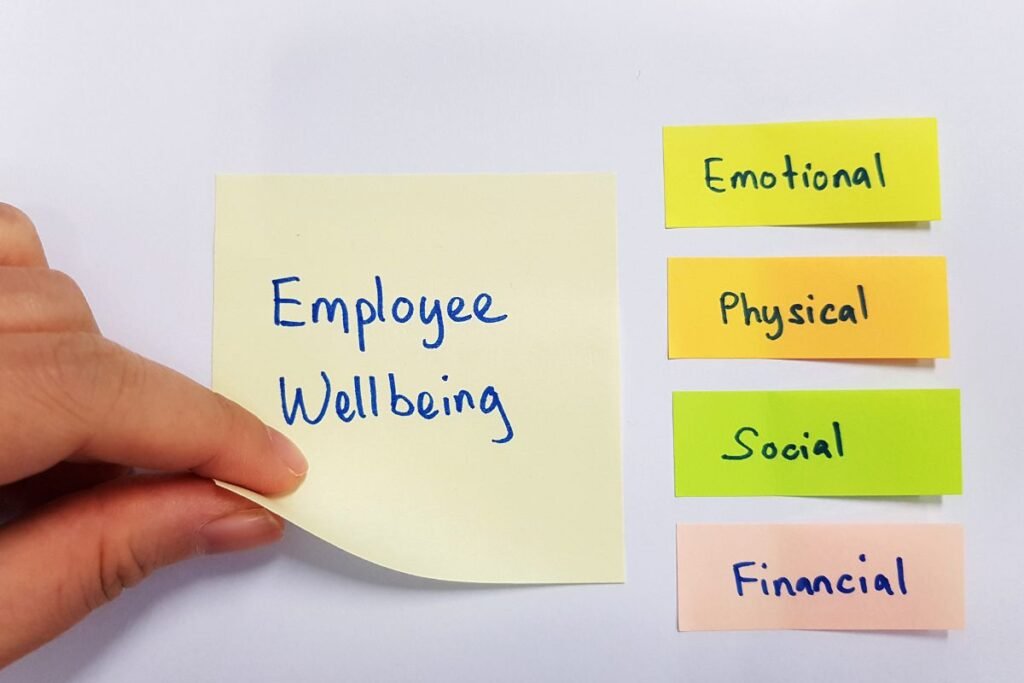
Employee Wellbeing Is Becoming a Core Productivity Strategy
The link between employee wellbeing and business performance is no longer theoretical.
A second UK four-day working week pilot concluded in 2025, with all 17 participating companies choosing to make the arrangement permanent.
Sixty-two per cent of employees reported reduced burnout, and businesses maintained service standards and key performance metrics throughout the trial.
These results reflect a broader shift in how productivity is understood: sustainable output requires sustainable conditions.
Flexible scheduling, mental health support, and genuine autonomy over working patterns are viewed as performance strategies that reduce absenteeism, improve retention, and protect long-term output.
In addition, organisations are placing greater emphasis on creating psychologically safe working environments, where employees feel supported and engaged.
This focus is particularly important in competitive labour markets, where retaining skilled talent is closely tied to how well businesses address wellbeing and work-life balance.
Businesses Are Fighting “Always-On” Digital Overload
Constant notifications, back-to-back meetings, and fragmented communication tools are some of the most significant drains on workplace productivity.
Many businesses are now actively reassessing meeting culture, consolidating communication platforms, and carving out protected time for deep-focus work.
The shift towards asynchronous communication, where teams share updates and decisions in writing rather than defaulting to calls, is gaining traction as a way to reduce cognitive load without sacrificing collaboration.
Some organisations are also introducing “meeting-free” days or structured quiet hours to help employees concentrate on complex tasks without interruption.
The businesses making the most progress here are those treating digital boundaries as an operational discipline, one that directly affects the quality of thinking and output their teams can produce.
By reducing unnecessary distractions, companies are enabling more meaningful work to take place within the same working hours.
The most productive workplaces of the next decade will be those that treat flexibility, technology and employee wellbeing as interconnected rather than separate concerns and start acting on that now.
Organisations that successfully integrate these elements are likely to build more resilient, engaged, and high-performing teams, positioning themselves to compete more effectively in an increasingly dynamic and digitally driven economy.